
Palm Bay, FL · Garage Door Service
Garage Door Repair for Palm Bay's 1980s-Era Homes
Garage door repair for Palm Bay homes built 1966-2003, where original torsion hardware and humidity-swollen tracks are the most common calls we get.
- Repairs & new doors
- Springs & openers
- Serving 5 nearby communities
Can You Do This Yourself
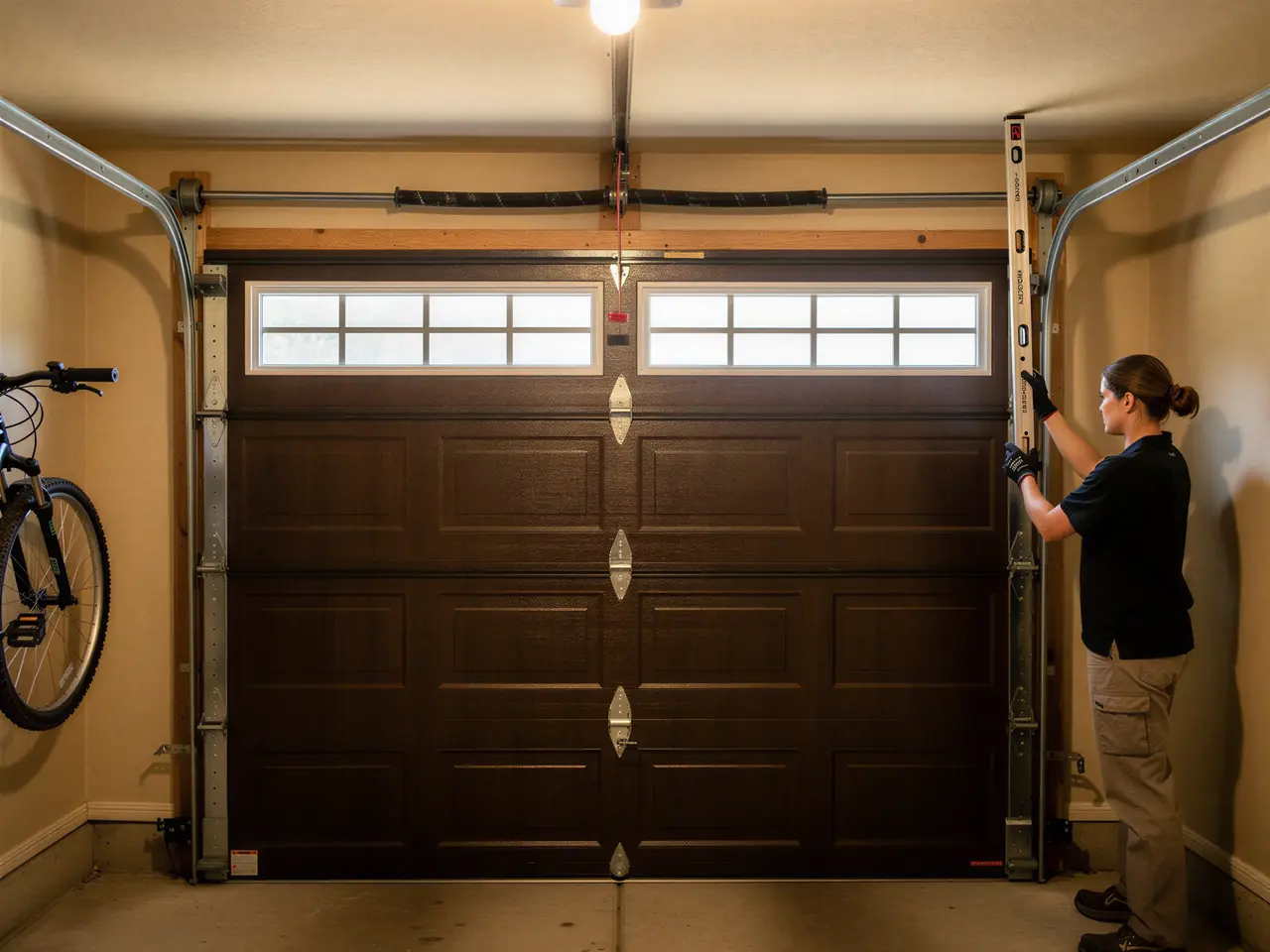
Some of it, yes. Tightening loose hinge bolts, cleaning and lubricating rollers, or straightening a bent bottom bracket are jobs a homeowner with basic tools can handle on a Saturday morning. Replacing a torsion spring is not one of them. A door that's roughly 7 feet tall carries enough stored force in that spring to break a finger or worse if the winding bar slips, and most of the doors we see on Palm Bay's older streets still run the original side-mounted torsion hardware from when the house was built - hardware that's now 25 to 50 years old and doesn't forgive guesswork.
If the door won't open at all, or opens a few inches and stops, leave it alone and call someone. If a cable has jumped the drum or frayed, same answer - that's a tensioned-system repair, not a DIY afternoon. Where you can safely help yourself: clearing the photo-eye sensors of dust, checking that the opener's force setting isn't fighting a sticky track, and keeping weatherstripping intact so humidity doesn't warp it further. Know the line, and you'll save a service call on the easy stuff and your hand on the hard stuff.
What the Repair Takes
Most torsion spring jobs on a standard double door run under two hours once we're on site, parts depending. Track alignment and roller replacement is usually faster. What takes longer in this area is matching hardware: a house built in 1987, which is close to the median build year across the Palm Bay housing stock we work in, often has a spring size or drum configuration that newer stock doors don't match off the shelf. We carry common sizes on the truck, but if your door is an older or less common width, that part may need to be ordered rather than pulled straight off the van.
We also check the opener's travel limits and force settings after any spring or cable work, since a mismatched spring tension will make the opener strain even after the obvious fault is fixed. On homes with the original steel track from the 1980s-90s construction wave common across this service area, we'll flag pitting or rust at the rollers even if that's not what you called about - it's cheaper to deal with early than after a track failure strands the door open.
How It Shows Up
The classic sign is a door that won't budge, or one your opener strains against and then reverses. That's almost always a spring - either snapped clean, in which case you'll hear a bang (often mistaken for a gunshot or a car backfiring), or gradually weakened, which shows up as a door that feels heavier lifting it by hand each month.
A second pattern we see a lot in this climate: tracks that bind or a door that sticks partway, not from a broken part but from humidity swelling the wood trim around the opening or softening weatherstripping enough to throw the track out of true. Mild, humid air year-round means wood components expand and contract more than they would in a drier climate, and that movement works loose the lag screws holding the track bracket to the jamb. If your door only sticks in certain weather, that's usually the tell.
Why It Happens Here
Housing across this service area was mostly built between 1966 and 2003, with the bulk going up in the 1980s and 90s across the fourteen named neighborhoods we cover. That means a large share of doors and openers are original or close to it - nobody's torsion spring lasts 35 years, and most haven't been swapped since the house was framed. Add a mild, humid year-round climate rather than a dry one, and you get more wood movement at the jamb and more corrosion creep on unlubricated hardware than a drier region would see at the same age.
We see this pattern consistently from the older pockets near Malabar and Port Malabar Country Club out toward the newer construction closer to West Melbourne and Grant-Valkaria - older stock, original hardware, same failure mode, just at different stages. With close to 31,251 owner-occupied houses in the broader area we serve, a lot of these doors are hitting spring-failure age at roughly the same time.
Frequently asked questions
Why did my garage door spring snap with no warning?
Torsion springs are rated for a set number of open-close cycles, usually somewhere around 10,000. On a house built in the 1980s or 90s with the original spring still installed, that cycle count runs out eventually regardless of how well it's been maintained. The bang you hear is the spring letting go, not something you did wrong.
Is it worth repairing an old door or should I replace it?
If the track and panels are straight and it's just a spring, cable, or roller issue, repair makes sense. If the door itself is original to a 1960s-80s build and the panels are rusted or warped from humidity exposure, replacement is often the better money. We'll tell you straight which category yours is in.
How fast can you get a part for an older torsion spring size?
Common sizes we carry on the truck. Less common widths or older drum configurations sometimes need to be ordered, which adds a day or two. We won't know until we measure the shaft and drum in person.
Does humidity really affect garage doors here?
Yes. Mild, humid air year-round causes wood jambs and trim to swell and contract more than a dry climate would, which loosens track brackets over time. It's a slower, quieter failure mode than a snapped spring, but it's just as common a call for us.
By Neighborhood
Garage Door Repair across the Palm Bay area
We also handle garage door repair in these Palm Bay-area suburbs.
Book garage door service in Palm Bay
Call now or request a quote - tell us what the door is doing and where you are.