
Palm Bay, FL · Garage Door Service
When a Spring Goes in Cold Weather in Palm Bay
Why a torsion spring snaps on a cold morning in Palm Bay, tied to the area's 1966-2003 housing stock and its mild, rarely-freezing climate.
- Repairs & new doors
- Springs & openers
- Serving 5 nearby communities
When to Call Someone
If your door won't budge, or it slams down fast instead of lowering slow, stop pulling on it. That's usually a torsion spring that's let go, and the door is held up by nothing but the opener's gears - or by the cable on one side if the other spring already broke. Most houses in this service area went up between 1966 and 2003, with the bulk of the stock from the 1980s and 90s, so a lot of these springs are original or close to it. If the door drops suddenly on a cold morning, that's not a coincidence. Call before you try the emergency release, and don't let anyone stand under the door while you wait. A spring that's failed on one side can still let the other side carry the full weight for a few hours, and that second spring is usually just as old. If the opener is straining, grinding, or reversing halfway up, that's your door telling you before it fails completely - worth a call the same week, not after it snaps.
Where People Go Wrong
The usual mistake here is assuming cold-weather spring failure is a northern problem and ignoring the early signs. It isn't just a northern problem - it's an aging-metal problem that shows up worse when the metal gets a sudden temperature drop it isn't used to. With a mild temperate climate like this one, springs don't get the slow, repeated flexing that comes with a real winter. They sit in the same humid air most of the year, then get hit with one sharp cold snap, and a spring that's already fatigued from 30-plus years of cycling doesn't handle that change well. The other common error is lubricating the track or rollers and calling it done. That helps the door move smoother, but it does nothing for a spring that's already lost tension or developed a hairline crack in the coil. People also wait for both springs to go before replacing either one - bad idea, since a mismatched pair puts uneven load on the opener and the second spring usually fails within months of the first.
What Is Going On
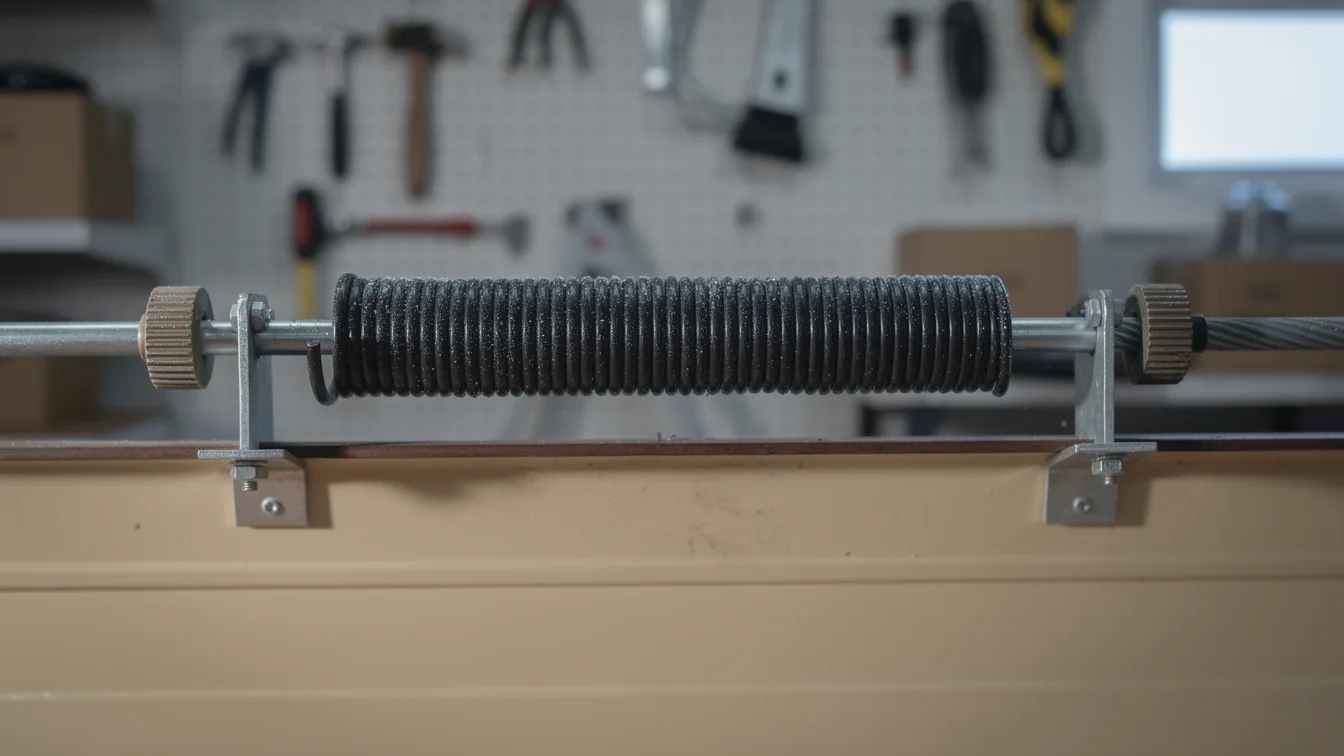
A torsion spring stores energy by twisting, and metal fatigue builds with every cycle whether the weather is involved or not. In a neighborhood where the median house dates to 1987, a lot of these springs have been through 20,000 to 30,000 open-close cycles, sometimes more. Steel doesn't fail gracefully after that much use - it fails at the weakest point in the coil, and that point is usually invisible until it goes. What a sudden cold front adds is a quick contraction in the metal. The spring doesn't get the chance to warm back up slowly the way it would if the temperature dropped gradually over weeks. Instead, it tightens fast, and if there's already a stress crack from three decades of cycling, that's the moment it lets go. This is why the failures tend to cluster right after the one or two cold mornings the area gets each winter, rather than spreading evenly across the season like you'd expect somewhere with a real cold climate.
What the Weather Here Does to It
This area sits in a mild temperate band, which means the metal on your door spends most of the year in warm, humid air and almost none of it in genuine cold. That's actually part of the problem. Springs here don't get conditioned to temperature swings the way they would somewhere with a real winter - they stay at roughly the same tension and temperature for eleven months, then get one or two mornings where the temperature drops fast enough to matter. That single sharp swing is harder on a spring with three decades of humidity exposure than a long, gradual cold season would be, because the metal hasn't had any practice handling it. Add in that houses from the 1966-2003 building wave are now old enough that original hardware is reaching the end of its service life anyway, and a cold morning becomes the trigger rather than the cause. One honest limitation: I can't tell you a repair will outlast a replacement on a spring this old - once a coil shows rust pitting or an uneven gap, matching a new spring to a worn-out second one is a short-term fix at best.
Frequently asked questions
Why did my spring break on the one cold morning we had this year?
Your spring has likely been cycling for 20 to 30 years in a mild climate that doesn't stress-test the metal the way a real winter would. A sudden cold morning causes a fast contraction, and if the coil already had fatigue cracks from age, that's when it gives out. It's less about the cold and more about decades of wear meeting one sharp temperature change.
Should I replace one spring or both?
If your door has a pair, replace both even if only one broke. They're usually the same age and have been through the same number of cycles, so the second one is close behind. Mismatched tension between an old and new spring also puts uneven strain on the opener, which shortens its life too.
Is this just a problem for older homes?
It shows up most in homes from the 1966-2003 building period, which covers most of this area, since original hardware from that era is now decades old. Newer doors with newer springs handle a cold snap without issue - age and cycle count matter more than the house's age alone, but the two usually track together here.
Related garage door services in Palm Bay
More garage door guides
Book garage door service in Palm Bay
Call now or request a quote - tell us what the door is doing and where you are.